Surgical Treatment · Sacroiliac joint

Sacroiliac Joint Surgery

Surgical stabilisation of the sacroiliac joint for patients with chronic SI joint pain unresponsive to injections and physiotherapy.

Sacroiliac Joint Surgery — treatment

What the procedure is

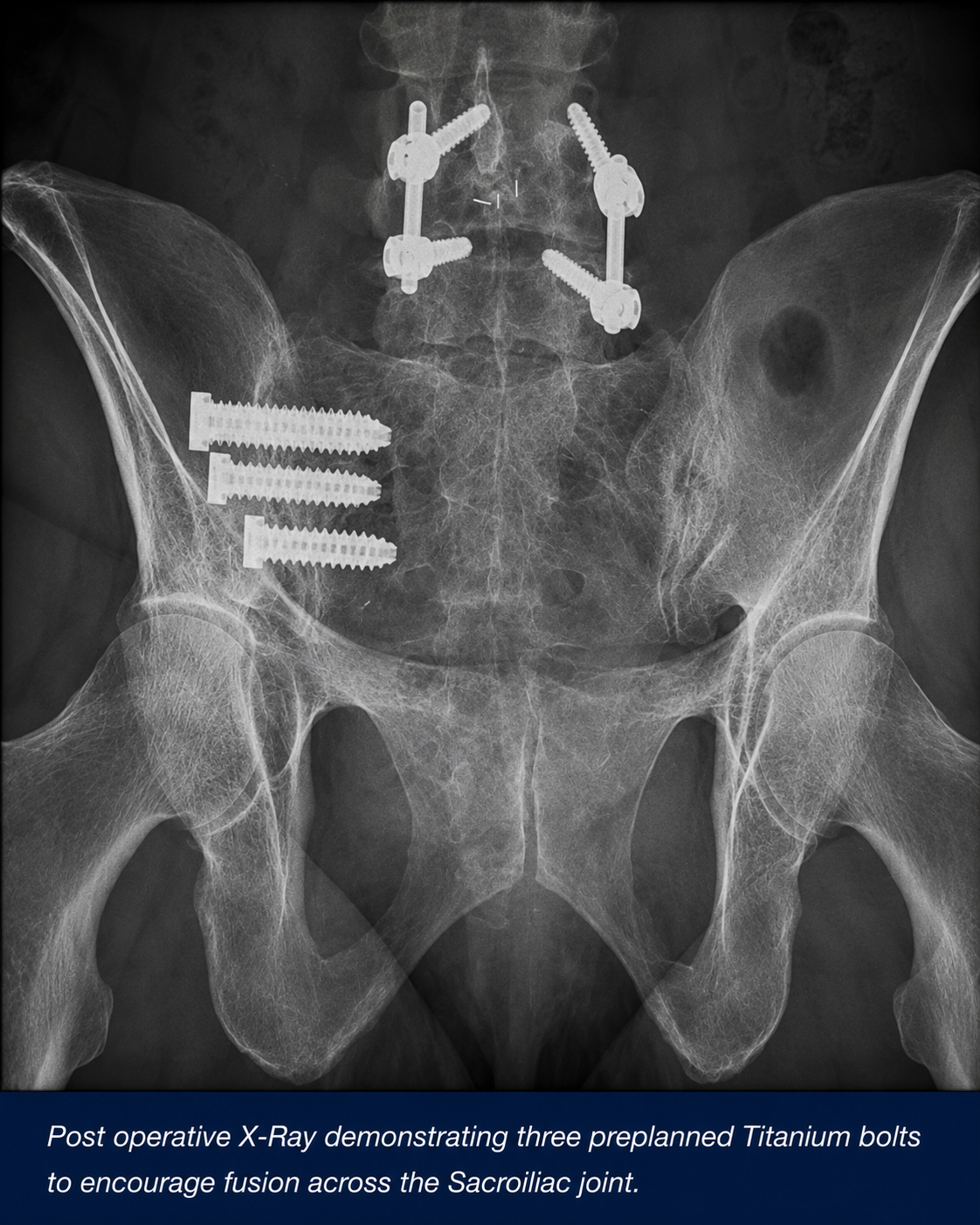
The sacroiliac joint connects the base of the spine (sacrum) to the pelvis. When it becomes dysfunctional or unstable, it causes low back and buttock pain that can radiate down the leg and be mistaken for sciatica. SI joint fusion stabilises the joint using small titanium implants placed across the joint through a lateral incision.

On the day

The procedure is minimally invasive and performed under general or regional anaesthetic. Mr. Rath uses fluoroscopic guidance to place the implants with precision. Hospital stay is typically one to two nights.

Weight-bearing walking is encouraged from the first post-operative day with physiotherapy support.

Why Mr. Rath's approach

Accurate diagnosis is the key to good outcomes in SI joint surgery. Mr. Rath uses a systematic diagnostic pathway — including provocative examination and image-guided injection — to confirm the SI joint as the pain source before recommending surgery. We only operate when the diagnostic criteria are clearly met.

Risks and considerations

  • Incomplete pain relief if additional pain generators are present
  • Implant malposition (minimised with intraoperative imaging)
  • Prolonged fusion timeline in older patients or smokers

Mr. Rath will discuss the full risk-benefit balance at your consultation.

Recovery timeline

  1. Day of surgery · 1–2 days

    Short hospital stay. Physiotherapy begins the following morning with weight-bearing walking.

  2. Week 1-2 · 2 weeks

    Rest at home with crutches if required. Gradual weight-bearing as tolerated.

  3. Week 3-6 · 4 weeks

    Crutches typically discontinued. Physiotherapy begins around week 4 to restore pelvic stability and walking pattern. Driving at around 4–6 weeks.

  4. Week 6 onwards · 3–6 months

    Phase-wise return to normal activity guided by Mr. Rath at the 6-week review. Fusion consolidates over 3–6 months.

Frequently asked
How do I know if my pain is coming from the sacroiliac joint?

Diagnosis is confirmed by a combination of clinical examination, imaging, and a diagnostic injection directly into the SI joint. If an injection relieves your pain significantly, surgery is more likely to help.

Take the next step

Discuss this treatment with Mr. Rath.

Online and in-clinic consultations available across the North West.

Book Appointment