The Spine — Anatomy & Function
The structure that supports us, and the highway that connects the brain to the rest of the body.
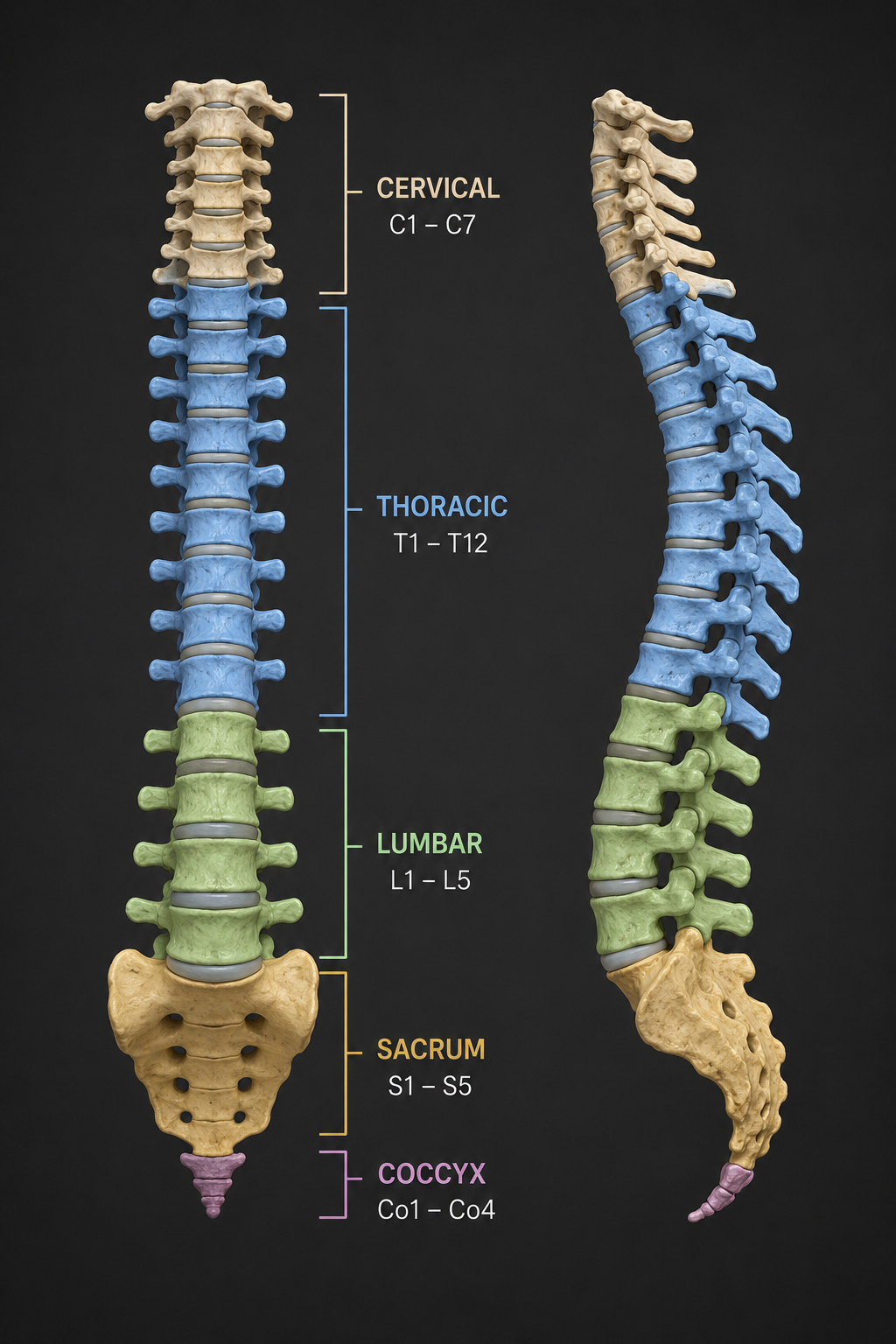
The spine, or backbone, is the bony connection between the skull and the pelvic bone. It supports us upright, and it acts as a superhighway connecting the brain to the rest of the body. From the neck (cervical) through the chest (thoracic) to the lower back (lumbar), it ends in the sacrum and the coccyx — the tailbone.
The spinal cord runs through this highway like a cable. At the lower spine it fans out into the cauda equina — Latin for "horse's tail" — where individual nerves continue to the legs.
Explore further
The spine is best understood in two parts: the mechanical unit that does the supporting and moving, and the neural pathway that carries signals between brain and body.
Take the next step
Ready to talk it through?
Speak with Mr. Rath about your diagnosis and treatment options.
Book Appointment