Surgical Treatment · Lumbar spine

Lumbar Decompression

Surgical widening of the lumbar spinal canal to relieve nerve compression. Mr. Rath performs decompression endoscopically wherever possible, with open or microscopic approaches available when the anatomy requires.

Lumbar Decompression — treatment

What the procedure is

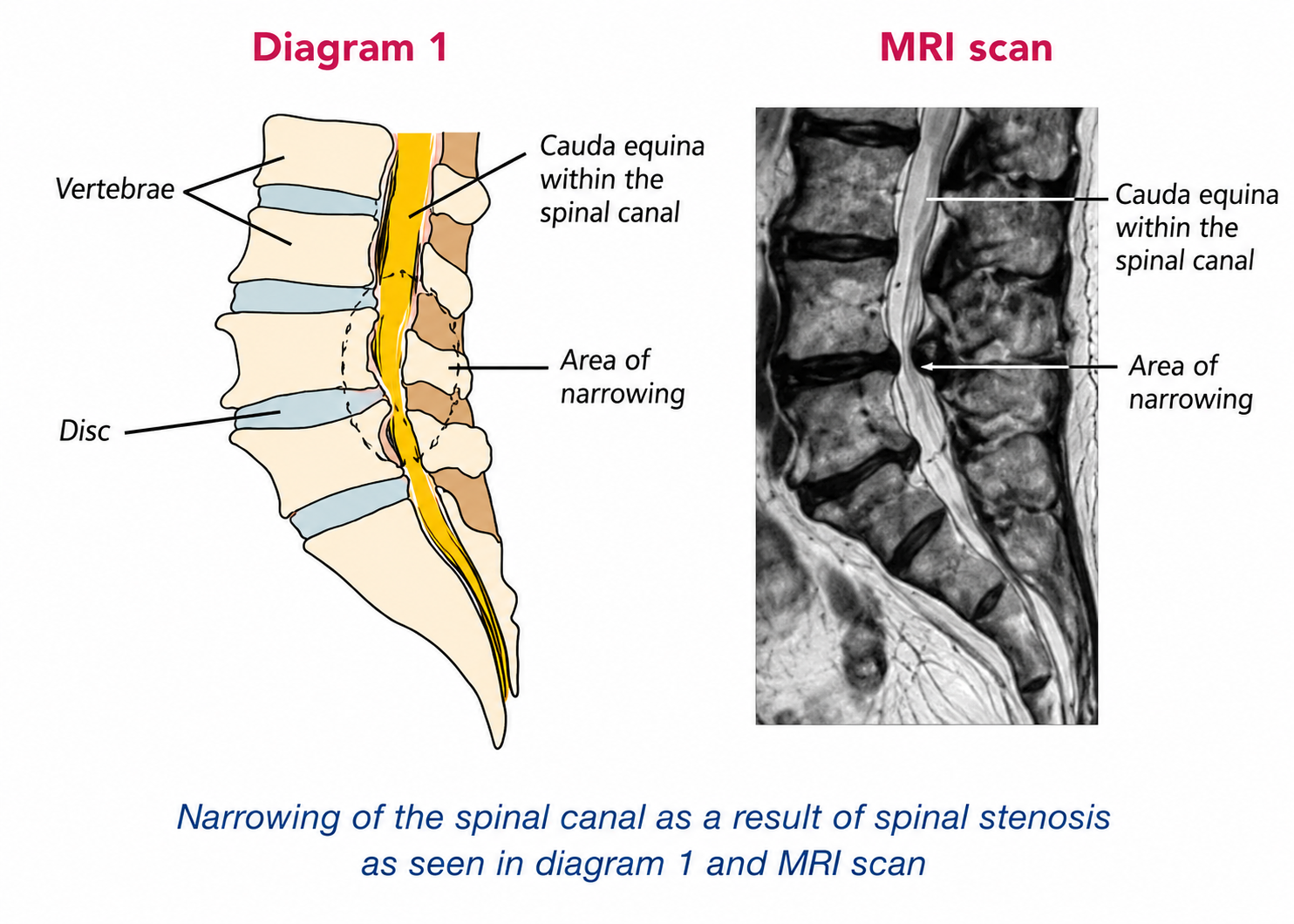
Lumbar decompression widens the spinal canal by removing the tissue pressing on the spinal nerves — typically thickened ligament, bone spurs, and overgrown joint tissue. Mr. Rath performs this endoscopically wherever possible. When the severity or extent of stenosis, coexisting instability, or revision anatomy makes a wider exposure more appropriate, he can also use open or microscope-assisted approaches.

On the day

The procedure is performed under general anaesthetic. A regional block is given to the spine to help with post-operative pain control. Mr. Rath uses intraoperative imaging to confirm adequate decompression before closing the wound.

Physiotherapy begins on the day — usually within 1–2 hours of surgery — and most patients are walking within 2 hours. Discharge is typically the following morning.

Why Mr. Rath's approach

Even when an open approach is required, Mr. Rath favours muscle-sparing technique where anatomy allows — limiting the resection to what is strictly necessary and preserving spinal stability. When decompression and fusion are required together, these can be combined in a single procedure.

Risks and considerations

  • Dural tear (slightly higher risk with severe stenosis)
  • Spinal instability if excessive bone is removed (mitigated by precise surgical planning)
  • Infection and wound complications
  • General anaesthetic risk

Mr. Rath will explain which approach — endoscopic, microscopic, or open — best suits your particular anatomy and the extent of your stenosis.

Recovery timeline

  1. Day of surgery · 1 day

    Walking encouraged within 2 hours of surgery. Physiotherapy begins on the day, and discharge is typically the following morning.

  2. Week 1-2 · 2 weeks

    Home recovery. Short regular walks. Avoid prolonged sitting. Pain managed with prescribed medication.

  3. Week 3-4 · 2 weeks

    Return to light activity including desk work. Physiotherapy begins around week 4 to rebuild strength. Driving after 2–3 weeks subject to comfort and safety.

  4. Week 6 · 6 weeks

    Phase-wise return to normal activity guided by Mr. Rath at the 6-week review.

Take the next step

Discuss this treatment with Mr. Rath.

Online and in-clinic consultations available across the North West.

Book Appointment