Condition · Lumbar spine

Lumbar Stenosis

Narrowing of the spinal canal in the lower back that causes leg pain and weakness on walking. Understand the diagnosis and minimally invasive treatment options.

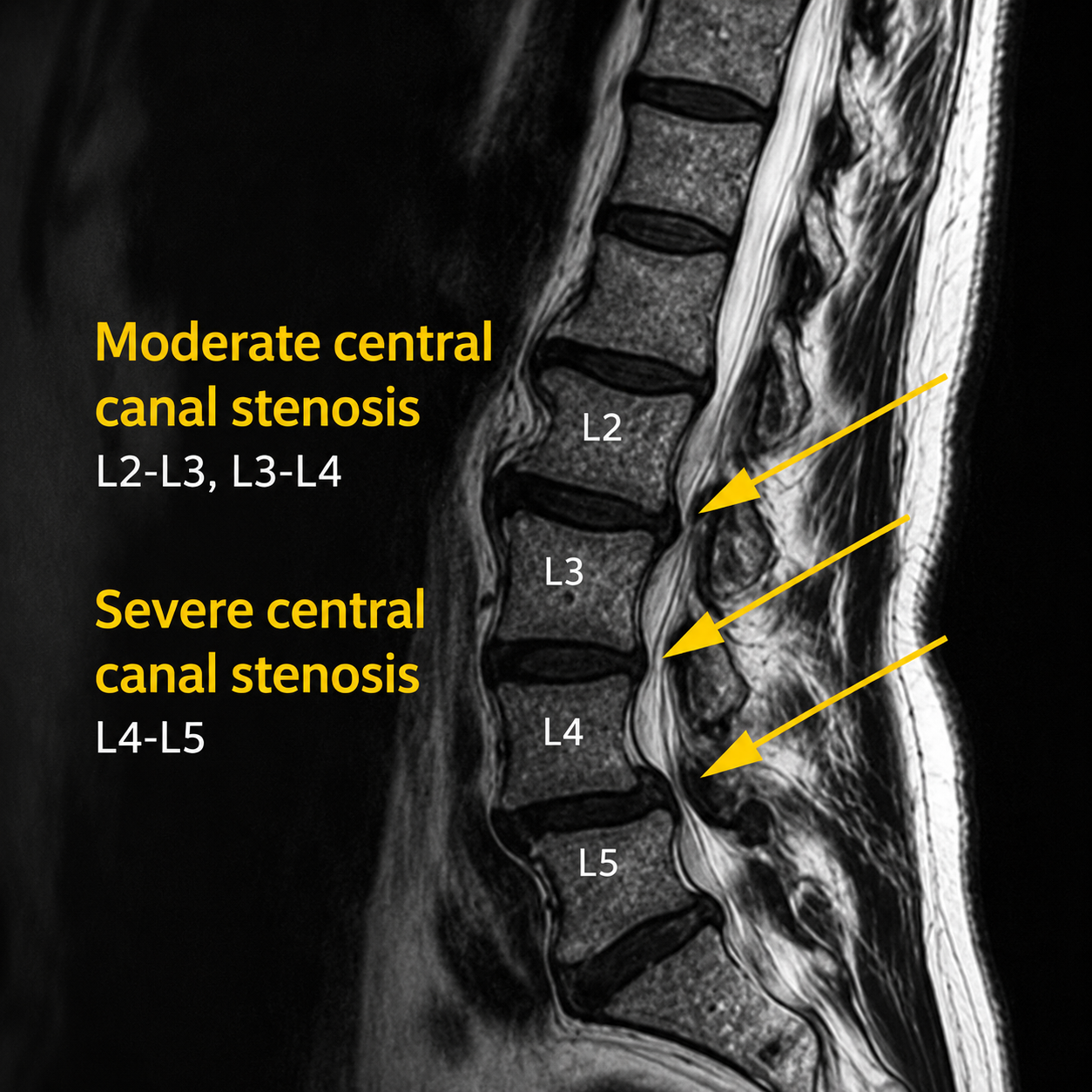
Lumbar Stenosis — anatomical illustration

What it is

Lumbar stenosis is a narrowing of the spinal canal in the lower back. As the canal tightens, it squeezes the nerve roots that supply the legs, causing characteristic cramp-like pain, heaviness, and weakness on walking — a pattern called neurogenic claudication. Unlike arterial claudication, sitting down or bending forward quickly relieves the discomfort because it opens up the canal.

How it's diagnosed

  • Symptom history: the classic story of pain building on walking and quickly settling with rest
  • Neurological examination to assess leg strength and sensation
  • MRI — the definitive test to quantify canal diameter and identify the levels involved
  • Standing X-rays if spinal instability or spondylolisthesis is suspected

Natural history

Lumbar stenosis tends to be slowly progressive. Many people manage their symptoms for years with activity modification and intermittent treatment. It rarely causes sudden deterioration, but a meaningful reduction in walking distance or growing neurological deficit are signals that surgical decompression should be considered.

What we look for in deciding

  • Walking tolerance and how much it limits daily life
  • Response to previous conservative treatment
  • Imaging severity — the degree of canal compression at each level
  • Whether there is associated instability that might change the surgical approach

Mr. Rath typically favours endoscopic decompression, preserving the posterior stabilising structures and allowing a faster, more comfortable recovery than traditional open surgery.

Frequently asked
Can lumbar stenosis be treated without surgery?

Yes — many patients improve with physiotherapy, targeted injections, and activity modification. Surgery is considered when walking tolerance is significantly reduced or conservative measures have plateaued.

How long does recovery take after endoscopic decompression?

Most patients are mobilising the same day and return to light activity within two weeks. Full recovery depends on the extent of the stenosis and individual health.

Take the next step

Discuss your diagnosis with Mr. Rath.

Online and in-clinic consultations available across the North West.

Book Appointment