Condition · Cervical spine

Cervical Myelopathy

Compression of the spinal cord in the neck causing weakness, clumsiness, and balance problems. Understand the diagnosis and why timely surgery is often essential.

Cervical Myelopathy — anatomical illustration

What it is

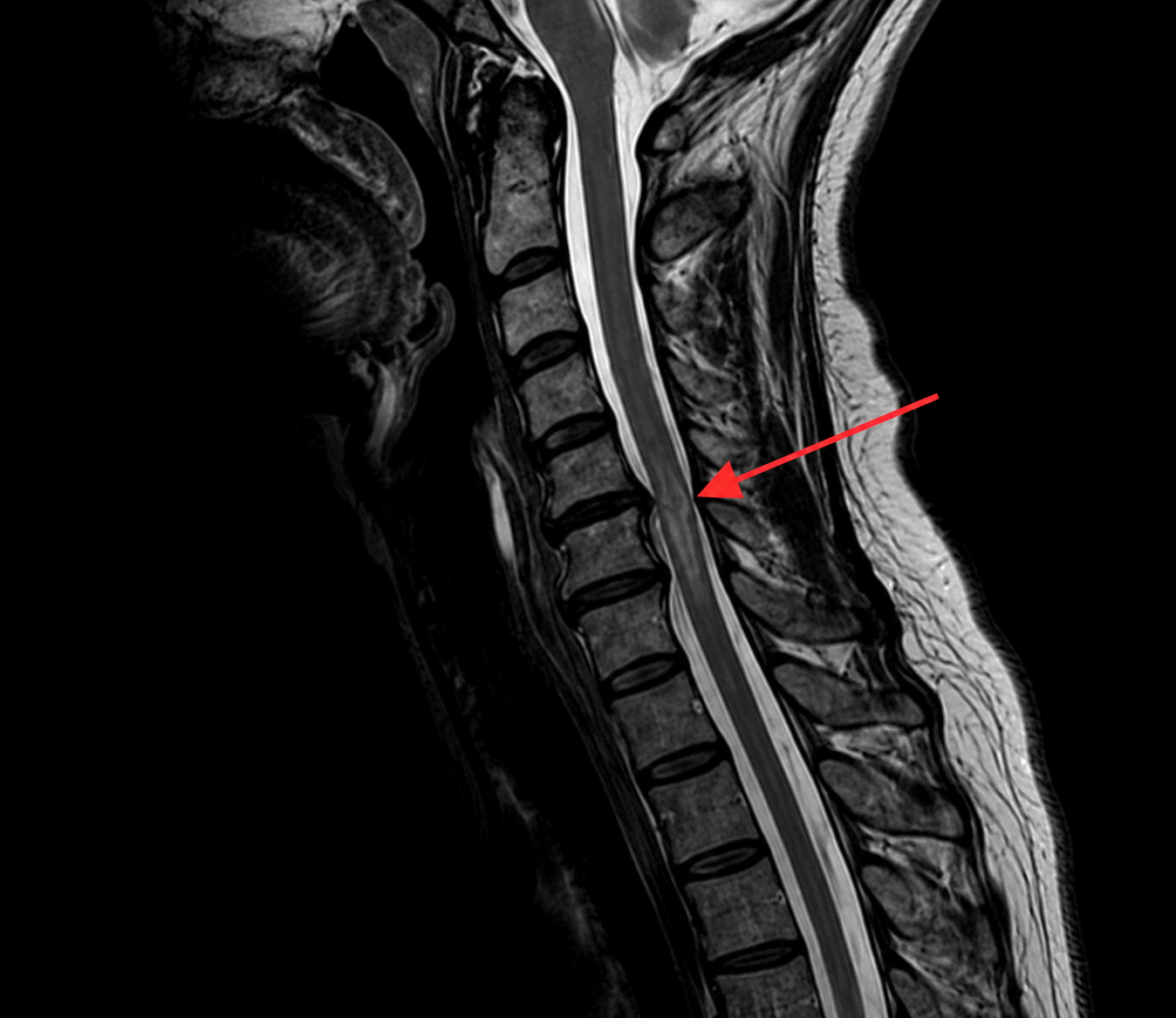
Cervical myelopathy occurs when the spinal cord itself is compressed within the neck, usually by a combination of disc herniation, ligament thickening, and bone spurs (osteophytes) associated with degenerative cervical disc disease. Unlike radiculopathy — which affects a single nerve root — myelopathy disrupts the spinal cord and can cause symptoms in the arms and legs simultaneously. Left untreated, the neurological damage may become permanent.

How it's diagnosed

Myelopathy can be subtle in its early stages. Key findings include:

  • Clumsiness with fine motor tasks — difficulty with buttons, writing, or typing
  • A wide-based, unsteady gait
  • Brisk or exaggerated tendon reflexes on examination
  • An electric shock sensation down the back when the neck is bent forward
  • An MRI scan showing compression of the spinal cord, and sometimes signs of damage to the cord itself

Natural history

Cervical myelopathy rarely improves on its own and frequently deteriorates, sometimes in a stepwise fashion following minor injuries or events. Once the scan shows signs of damage to the cord, recovery becomes harder — which is why most guidelines recommend surgical decompression once myelopathy is confirmed.

What we look for in deciding

  • Severity and rate of progression of symptoms
  • Whether the scan shows signs of damage to the cord — a marker of more advanced injury
  • Overall cervical alignment and number of levels involved
  • Fitness for surgery and patient preference

Mr. Rath's usual approach is anterior cervical discectomy and fusion (ACDF), which reliably decompresses the cord from the front and stabilises the affected levels. In select cases, a posterior endoscopic foraminotomy can relieve adjacent nerve root compression with less surgical footprint.

Take the next step

Discuss your diagnosis with Mr. Rath.

Online and in-clinic consultations available across the North West.

Book Appointment