What it is
The discs sitting between your vertebrae act like shock absorbers. A prolapsed (or "slipped") disc happens when the soft inner gel pushes through the tougher outer ring and presses on a nerve root — most commonly in the lumbar spine.
A prolapsed (slipped) intervertebral disc compressing nerve roots. Learn how it's diagnosed, what to expect, and the keyhole and surgical options.
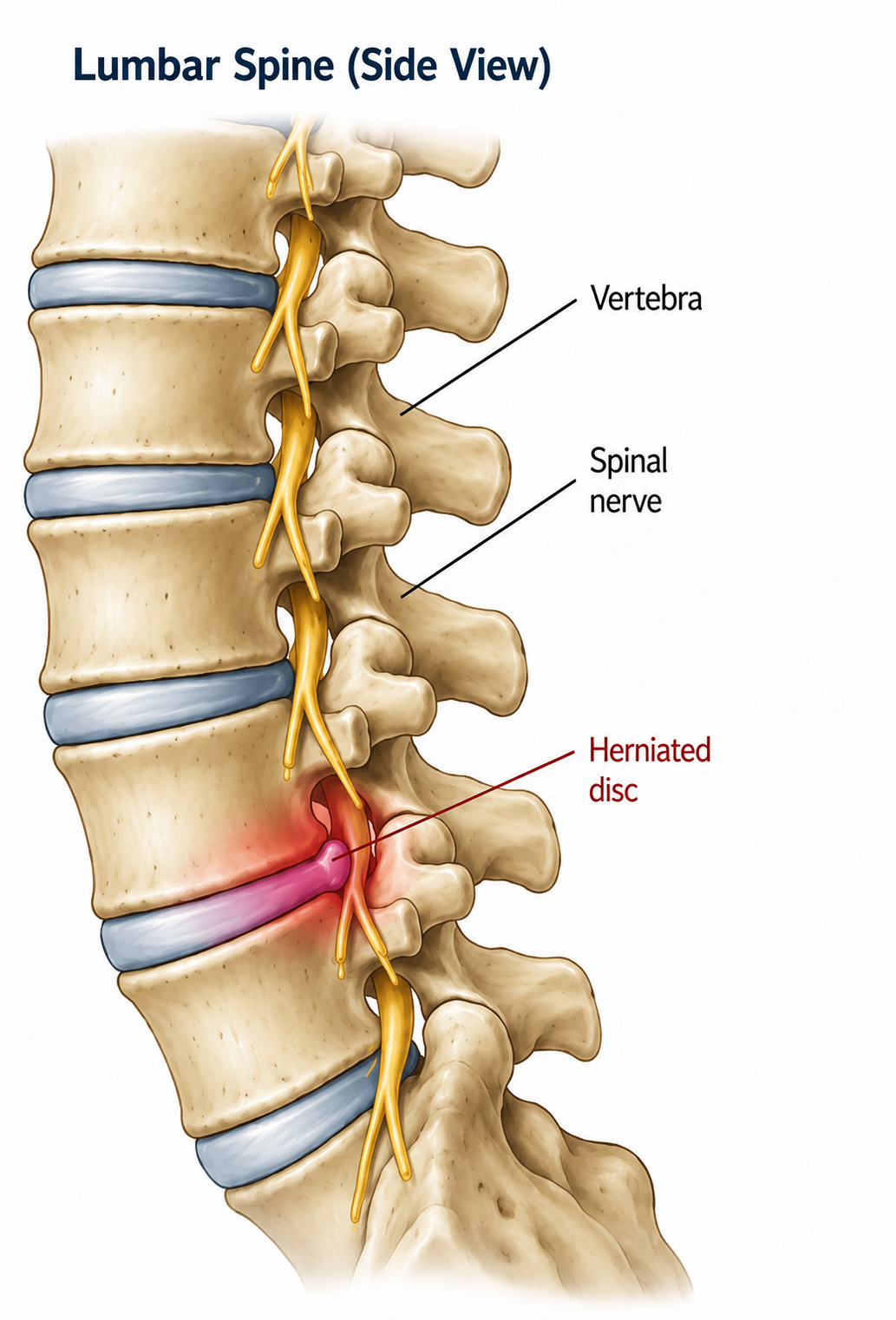
The discs sitting between your vertebrae act like shock absorbers. A prolapsed (or "slipped") disc happens when the soft inner gel pushes through the tougher outer ring and presses on a nerve root — most commonly in the lumbar spine.
Diagnosis is usually a combination of:
Two-thirds of disc prolapses settle on their own within 6–12 weeks. The body slowly resorbs the prolapsed material. Surgery is offered when symptoms persist, when there's progressive weakness, or when imaging shows severe nerve compression.
If keyhole surgery is the right answer, Mr. Rath performs the procedure through an incision smaller than a fingernail — no muscle stripping, much faster recovery.
No — most resolve with time, physiotherapy, and pain management. Surgery is usually reserved for persistent neurological symptoms or unrelenting pain.
Most patients walk out the same day and return to light activity within a week.
Online and in-clinic consultations available across the North West.
Book Appointment