Condition · Sacroiliac joint

Sacroiliac Joint Pain

Pain originating from the joint between the sacrum and pelvis, often mistaken for lumbar disc disease. Learn how Mr. Rath diagnoses and treats sacroiliac dysfunction.

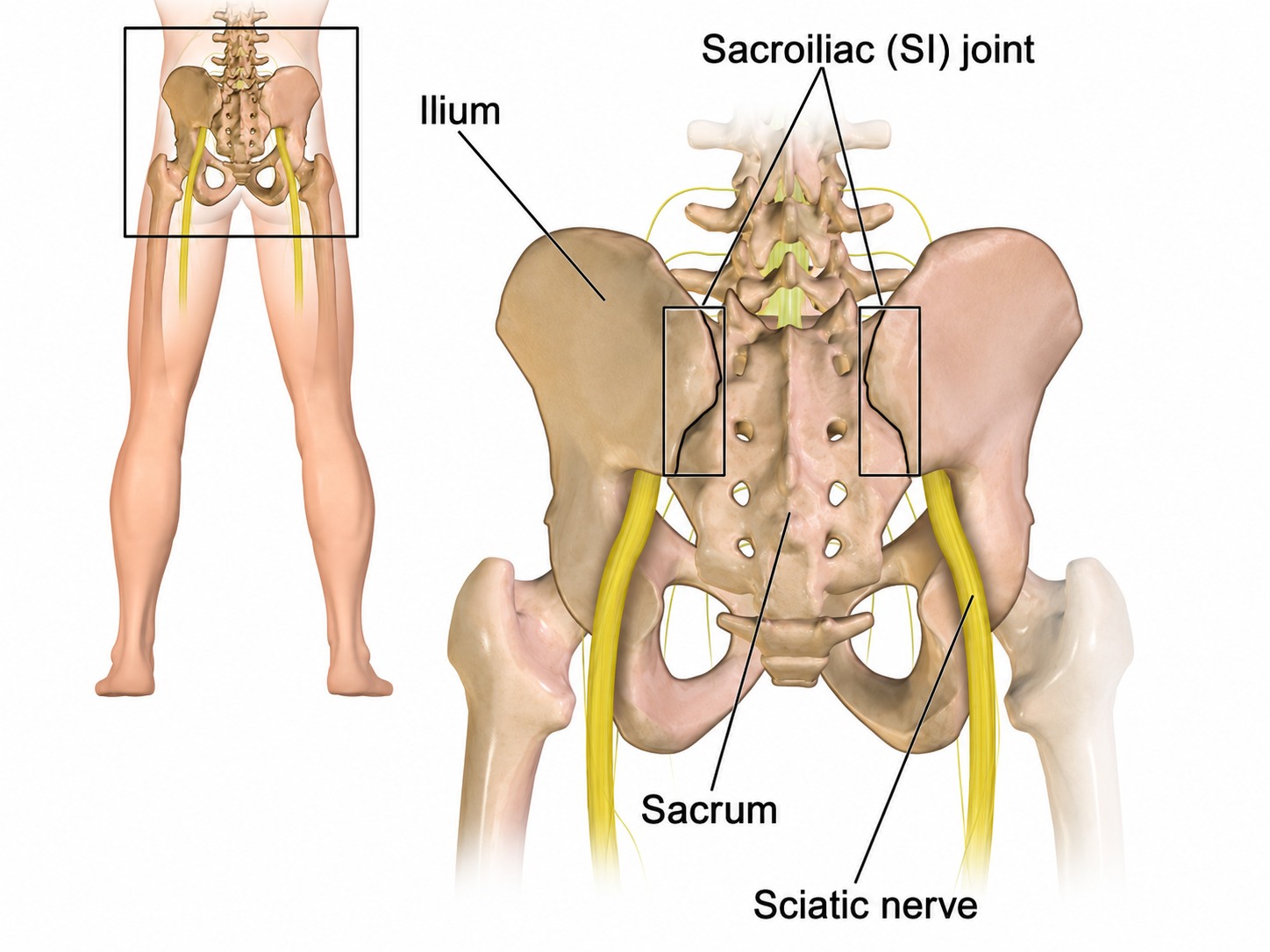
Sacroiliac Joint Pain — anatomical illustration

What it is

The sacroiliac (SI) joint connects the triangular bone at the base of the spine (the sacrum) to the pelvic ilium on each side. It bears the load transferred between the spine and legs with every step. When the joint is inflamed, hypermobile, or damaged — through injury, pregnancy, arthritis, or degeneration — it can generate significant low back and buttock pain that is easily confused with lumbar disc disease or hip pathology.

How it's diagnosed

SI joint pain is notoriously difficult to identify from history alone because the pain distribution overlaps with lumbar conditions. Diagnosis relies on a combination of:

  • Provocative examination tests (FABER, FADIR, compression, distraction) that stress the SI joint specifically
  • Ruling out lumbar disc, hip, and piriformis pathology
  • A diagnostic injection of local anaesthetic directly into the SI joint under fluoroscopic or CT guidance — relief confirms the joint as the pain source

Natural history

Sacroiliac dysfunction can fluctuate considerably. Many patients improve with targeted physiotherapy focusing on pelvic stabilisation, activity modification, and periodic injections. A subgroup have persistent, disabling pain that does not respond to conservative measures — these patients are candidates for minimally invasive SI joint fusion.

What we look for in deciding

  • Positive response to a diagnostic injection (typically 70% or greater pain reduction)
  • Duration of symptoms and failure of at least 3–6 months of conservative management
  • Imaging evidence of joint degeneration or instability
  • Absence of alternative diagnoses that would explain the pain

Mr. Rath assesses each patient carefully before recommending fusion, ensuring that the SI joint is truly the dominant pain generator rather than a coincidental finding.

Take the next step

Discuss your diagnosis with Mr. Rath.

Online and in-clinic consultations available across the North West.

Book Appointment