Symptom · Lumbar spine

Spinal Instability

A sense that your spine 'gives way' or shifts during movement. Learn the structural causes of lumbar instability and the available treatments.

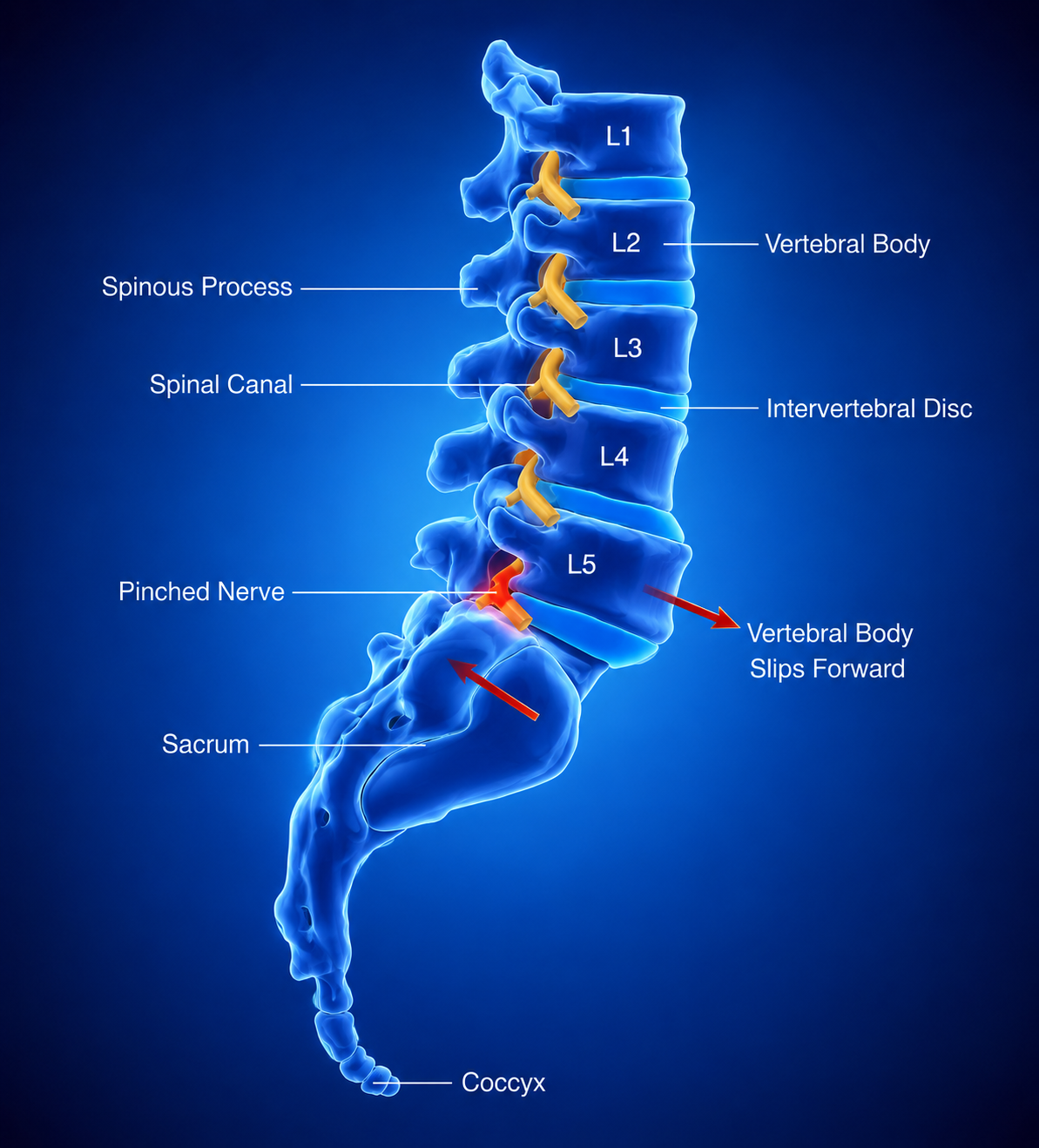
Spinal Instability — illustration

What it feels like

Spinal instability refers to abnormal movement between vertebrae — one bone sliding forward or backward on the one below, or excessive motion at a spinal segment that should be held firmly in place. You may experience a sudden sharp pain or a 'catch' when you change position, a feeling that your back is about to give way, or a general sense that your spine cannot be trusted during everyday activities.

Common triggers

  • Rising from a chair or bed — the transition from loaded to unloaded positions
  • Bending forward and returning to upright
  • Twisting movements, particularly if combined with load
  • Extended walking, which gradually fatigues the stabilising muscles
  • Certain sports involving rapid direction changes or heavy axial loading

When to seek help urgently

Spinal instability that produces the following symptoms needs prompt specialist review:

  • New or rapidly worsening leg weakness or numbness
  • Bladder or bowel dysfunction — seek emergency care immediately
  • Inability to stand or walk due to pain or mechanical giving way
  • Pain following a significant spinal injury or high-energy trauma

What to expect at consultation

Mr. Rath will assess whether true structural instability exists by reviewing dynamic flexion-extension X-rays alongside any MRI you have had. The examination focuses on identifying whether the spine is shifting abnormally and which level is responsible. Treatment options range from targeted physiotherapy through to surgical stabilisation, depending on the degree of slip and the impact on your quality of life.

Take the next step

Talk to Mr. Rath about your symptoms.

Online and in-clinic consultations available across the North West.

Book Appointment